Currency and shop structure below are compiled from official store text and public demo writeups.
Exact price tables can change with weekly patches; use in-game tooltips as the final number source.
Timeline nodes
Shops as the main decision surface
A large share of timeline nodes are shops. Each shop can offer heroes, items, and relics. Rerolls let you hunt a missing piece at the cost of Shards that could have bought a merely good unit now. Early ranks reward buying functional bodies; later ranks reward targeted pieces that complete a relic condition.
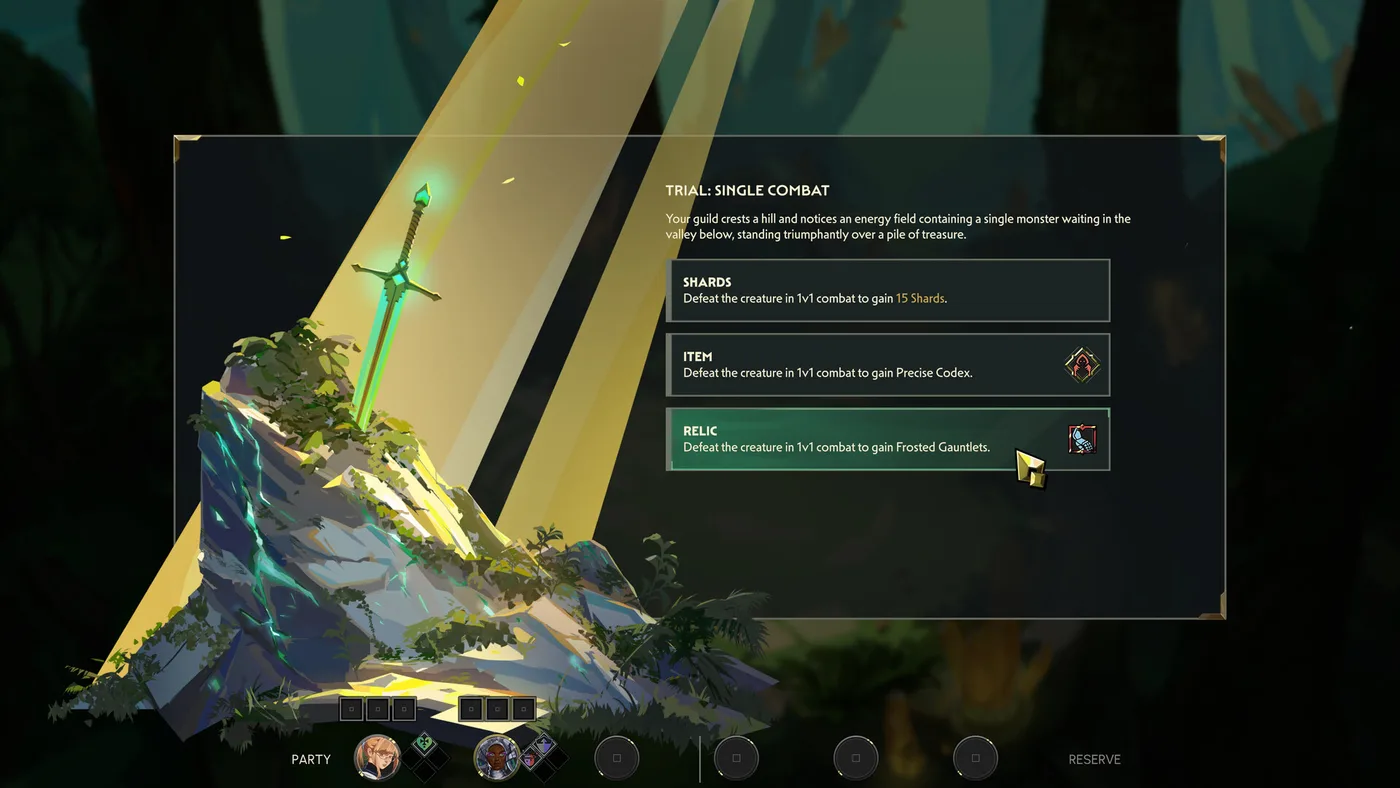
Trial-style events sit beside shops. A public screenshot shows a 'Trial: Single Combat' node offering a three-way choice among Shards, an item, and a relic for defeating a solo monster over a treasure pile. These nodes are intentional forks, not flavor text.
Act climax
Act-end auctions
At the end of each act, an auction opens as a supercharged shop. Public coverage describes better heroes, better items, and powerful relics unavailable elsewhere, including team-size expansion. Because auctions are scheduled, you can bank Shards on purpose without randomly starving earlier fights if your board is already stable.
If your party is capped and every fight is a traffic jam, prioritize auction relics that add slots. If your board has slots but no identity, prioritize the best A-rank or S-rank hero and the item that lets them live.
Heroes, items, relics, rerolls
Often exclusive choices
Exclusive high-impact relics
Heuristics
Budget heuristics that survive patches
Keep enough Shards to take at least one auction action if the next node is a boss-to-auction sequence. Spend freely when the next node is a hard fight and your board is incomplete. Reroll when zero offers interact with your relics or class plan.
Economy relics change these rules. Once Shard gain becomes a combat trigger, 'wasting' Shards on low rolls can be correct if it re-triggers shields or other effects — read the text before applying default thrift.
Write a one-line plan before each shop: "need Backup healer," "need second assassin tag," or "need any body that lives two seconds." Plans beat vibes when the shop is noisy. Update the plan after every relic because relics rewrite what "need" means.