Guildrun expects you to think between fights, not mash during them. Place the party, let combat resolve, then spend the rewards.
Treat the first clear as a tutorial for systems and unlocks. Later difficulties and Endless mode are where leaderboard greed starts.
Core loop
The loop in one run
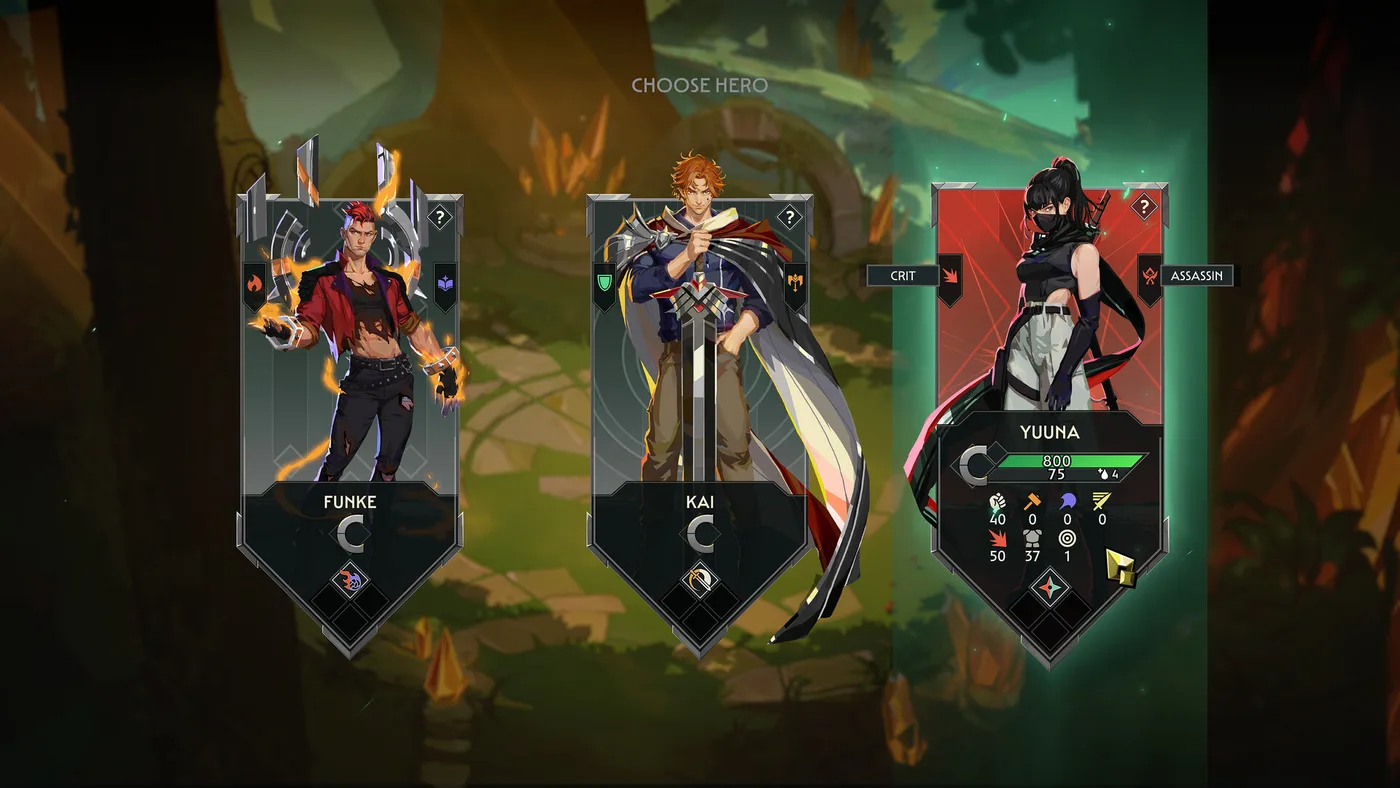
A run is a chain of fights, shops, and events along a rift timeline. You start with a hero choice, then grow a guild by buying units, ranking them, equipping items, and collecting relics. Bosses close acts; auctions after acts sell stronger pieces than normal shops.
There is no matchmaking queue and no combat timer. You can think as long as you want, save mid-run, and come back later. Official materials pitch short ~20 minute runs, but harder difficulties and Endless runs stretch far longer once you know the systems.
Your first mental model should be: fights are tests of the previous shop, not arenas where mechanics skill saves a bad draft. If you lose, open the damage meter, identify who did nothing, and decide whether the fix is items, ranks, Reserve Backup, or a full pivot.
- Place heroes on the board before combat starts.
- Earn Shards from fights and some combat effects, then spend them in shops.
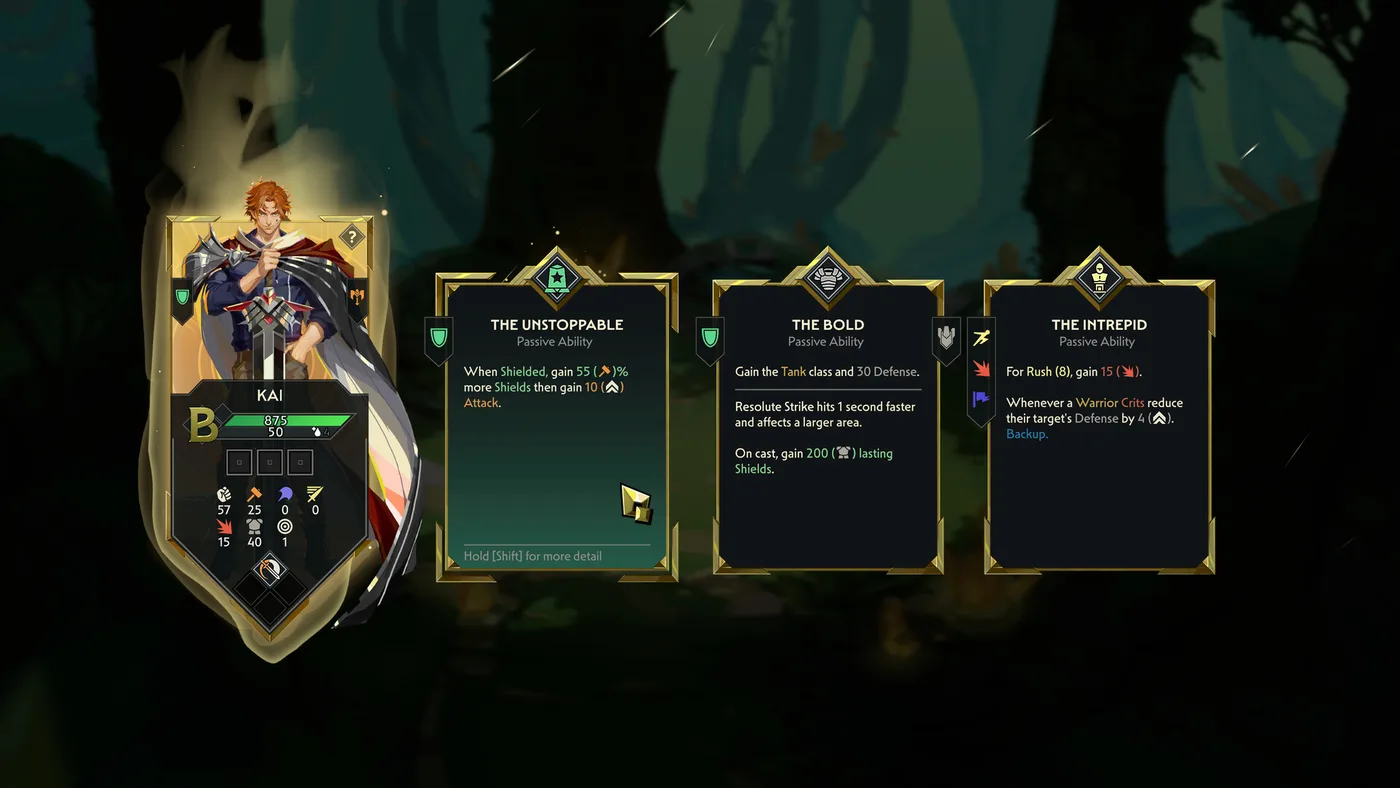
- Rank heroes (C → B → A → S) to unlock specialization choices.
- Fill Reserve slots with Backup abilities that still help the fielded team.
- Clear a difficulty to unlock the next step on the eight-tier ladder.
Session plan
What to do in your first session
Open the demo, play one full easy clear without overthinking. Focus on learning the shop UI, trial reward panels, and the party/reserve bar rather than hunting a perfect board. After the first clear, restart and deliberately force one pivot: sell a carry that stopped scaling and rebuild around a late A-rank shop hero.
Unlock progress is run-based. Official store copy says heroes, relics, and items unlock as you complete runs, expanding the demo pool toward 25 heroes, 180 specializations, 300+ relics, and 100+ items. That means early failures still advance the meta-progress of the account.
Learn shops + bosses
Practice mid-run rebuilds
Whole-team effects matter
Backup keyword value
Combat
Placement, not micromanagement
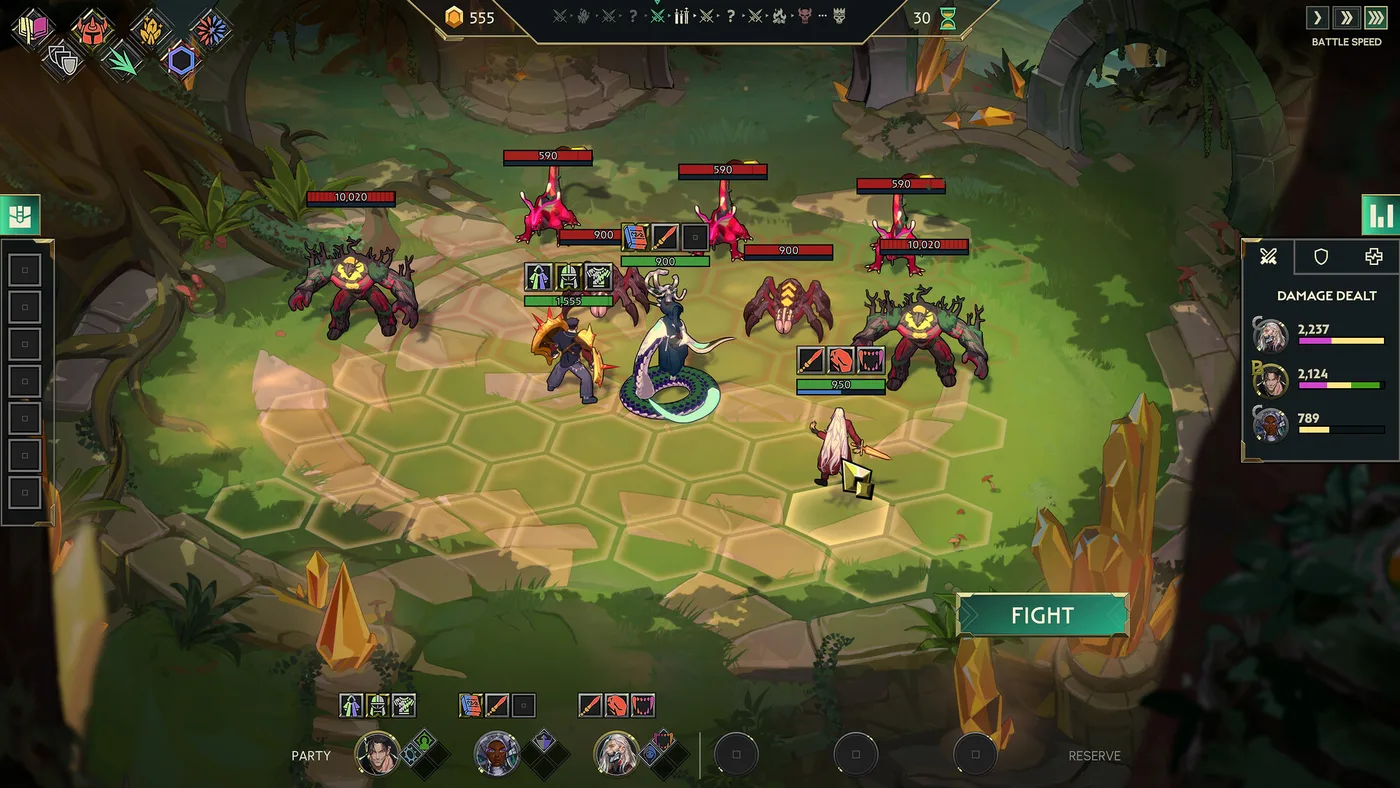
Combat is an autobattler: after placement, units fight on their own. Your job is positioning, class mix, item holders, and the timing profile of abilities. Keywords matter more than raw portraits. Rush abilities fire early; Stall abilities hold for later windows; Backup effects can still apply from Reserve.
Damage meters and health bars on the right-hand combat UI show who is carrying. If a supposed tank dies first every fight, either move them, item them for survivability, or stop pretending they are still a tank after a damage-oriented specialization.
Frontline failures often look like bad luck until you notice the tank specialization path turned them into a damage hybrid without defensive items. Read the rank choice text slowly the first dozen times; it is where Guildrun hides its class-breaking fantasy.
Positioning still matters even without manual casting. Clumped backliners can share area effects; isolated carries may dodge some patterns. Treat the board like a puzzle you solve with the roster you actually own this run, not the roster you wish the shop had offered.
Shards
Spend for options, not hoarding
Shards are the run currency. You earn them between rounds and sometimes during combat, then spend them on heroes, items, relics, and rerolls. Early over-saving is a common new-player trap: empty shops that you could have rerolled leave you with a dead board into the next fight.
Trial events often present mutually exclusive rewards — for example Shards versus a named item versus a relic. Take the reward that fixes your current failure mode. If you are dying, survivability or sustain beats a greedy damage relic.
A simple early heuristic: if the next node is a fight and two shop slots fix holes, buy them. If the next node is an auction and your board already clears the previous elite cleanly, bank. Heuristics break when a relic pays you for spending, so always re-read economy relics the moment you pick them.
- Reroll when the shop has nothing that advances your board plan.
- Buy the A-rank shop hero if they solve a missing role even if you already have a pet unit.
- Act-end auctions are high-impact; keep enough Shards to contest them.
Traps
Mistakes that end early runs
The biggest trap is treating starting class labels as destiny. Official materials lean hard on class-breaking: healers can tank, ranged units can melee, lovers can pair for scaling, and multiclass boards can share execute or other team-wide effects.
The second trap is ignoring Reserve. Backup abilities mean your sixth and seventh ideas still matter. The third trap is never selling. Guildrun rewards pivots when a relic wants mono-class, rainbow-class, burn stacks, or attack-count thresholds.
Is Guildrun free?
The Steam demo is free to download. The full game is a separate paid product planned for late 2026; check the main Steam page for price when it appears. Steam remains the authority for price and demo availability if the store page changes. The demo download itself does not require a paid license, while the full 2026 release will use the main Steam app listing for commerce.
Do I need other autobattler experience?
No. If you know Teamfight Tactics-style placement or Slay the Spire-style relics, the systems will feel familiar, but the demo teaches the loop without requiring that background. Autobattler experience helps, but the demo teaches placement and shops without requiring TFT rank history. Reading keyword tooltips carefully matters more than bringing a prior ladder rank from another title.
How long is a beginner run?
Leyline describes short runs you can save mid-way, around the twenty-minute range on normal pacing. Expect longer sessions once you climb difficulties or enter Endless mode. Longer Endless climbs stretch well past a short session once you understand auctions and pivots. Your first clears should prioritize learning shops and one auction rather than speedrunning leaderboard targets.